The ARTISTS
friday, september 11th 2026
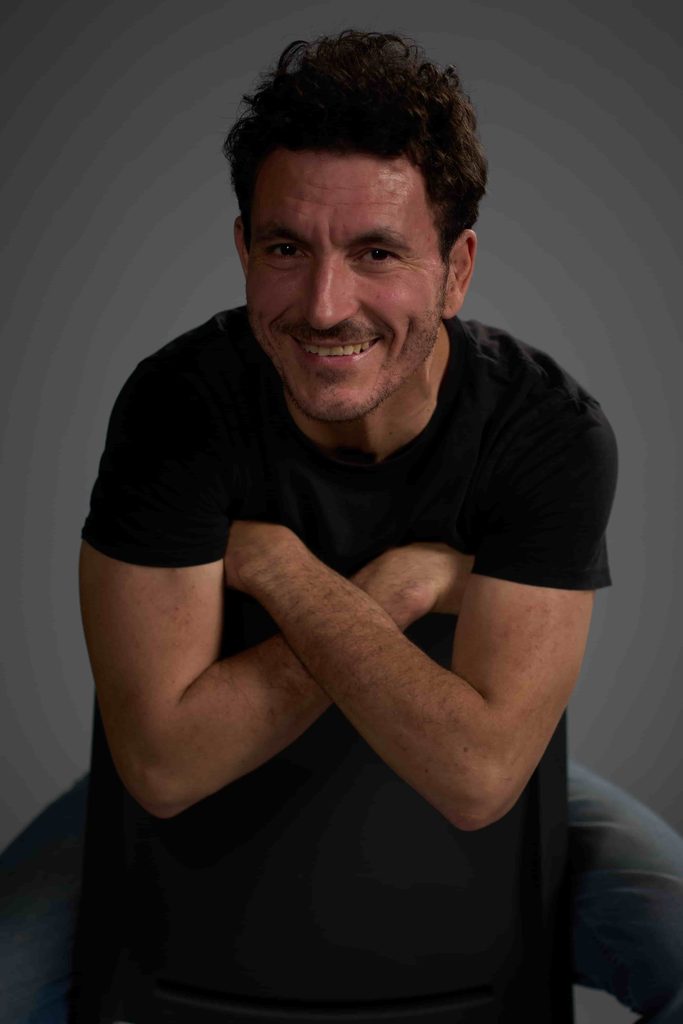
Denis Campitelli,
Prologue-Cantèda de Cavàl
Epilogue-Cantèda ad Penelope
actor and playwright
The first concert of Ulysses’ third edition opens and closes with Tonino Guerra’s Odiséa, his rewriting of Homer in the Romagnolo dialect of Santarcangelo. It begins with the first canto, Cantèda de Cavàl — the canto of the horse: the trick that sets everything in motion. It ends with the last, Cantèda ad Penelope — the canto of Penelope: the waiting, and the return. Between the two cantos lies the journey. Tonight, in its place, there is the music.
Denis Campitelli (Cesena) is an actor and playwright. He trained from 2001 at Franco Mescolini’s “Bottega del Teatro” and in 2006 at the Atelier della Costa Ovest in Livorno. Since 2009 he has worked regularly with Teatro Due Mondi in Faenza, who introduced him to street theatre and to performing on stilts, and with Teatro Patalò in Santarcangelo. From 2015 he has combined stage work with film and television, appearing in films by Sorrentino, Pontecorvo and Diritti.
At the centre of his work is the Romagnolo language. In 2022 he took on the role of dialect coach for the first time, on the Sky series M — Il figlio del secolo, teaching Luca Marinelli, who plays Mussolini, to speak with a Romagnolo accent. He returned to the role in 2025 for the Rai series Cagnàz, in which Guido Caprino plays a police officer working in Rimini.
Alessia Scilipoti
& Agnese Sofia Bonato
Narrazioni Risonanti – Resonant Narrations
Flute & Narration
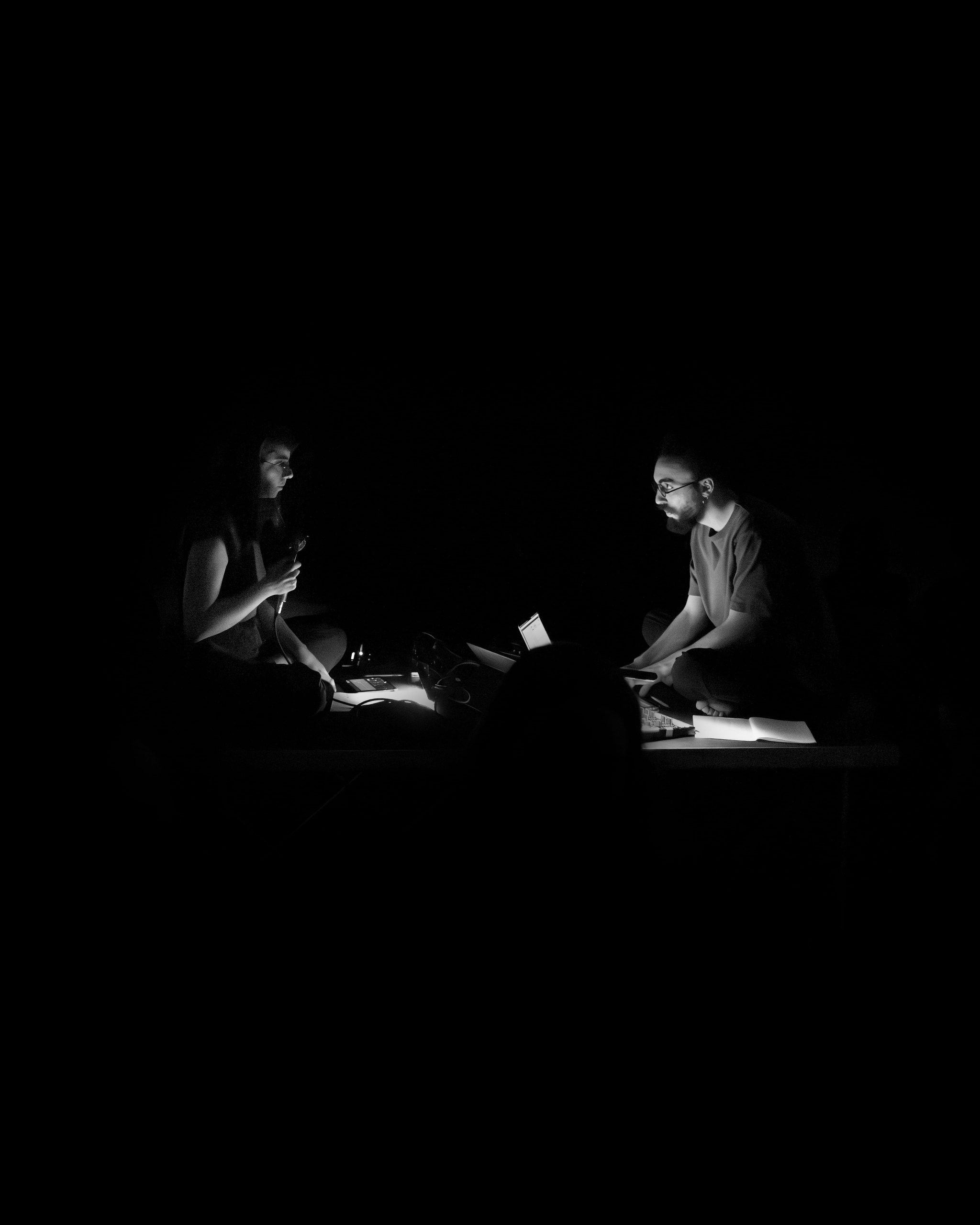
Narrazioni Risonanti moves along the borders between word and music, exploring the threshold where language turns into sound and breath becomes voice. The project grew out of Alessia Scilipoti’s album Fragile — contemporary works for solo flute, breath and voice (Da Vinci Classics, 2025), and takes shape on stage through the presence of the actor Agnese Sofia Bonato.
The performance follows a precise ritual of metamorphosis: the speaking voice delivers the poetic text in its verbal purity, savouring the sound of the words; the flute then plays the composition born from those same lines, stripping them of their literal meaning and breaking them down into phonemes, breath and timbral and vocal effects.
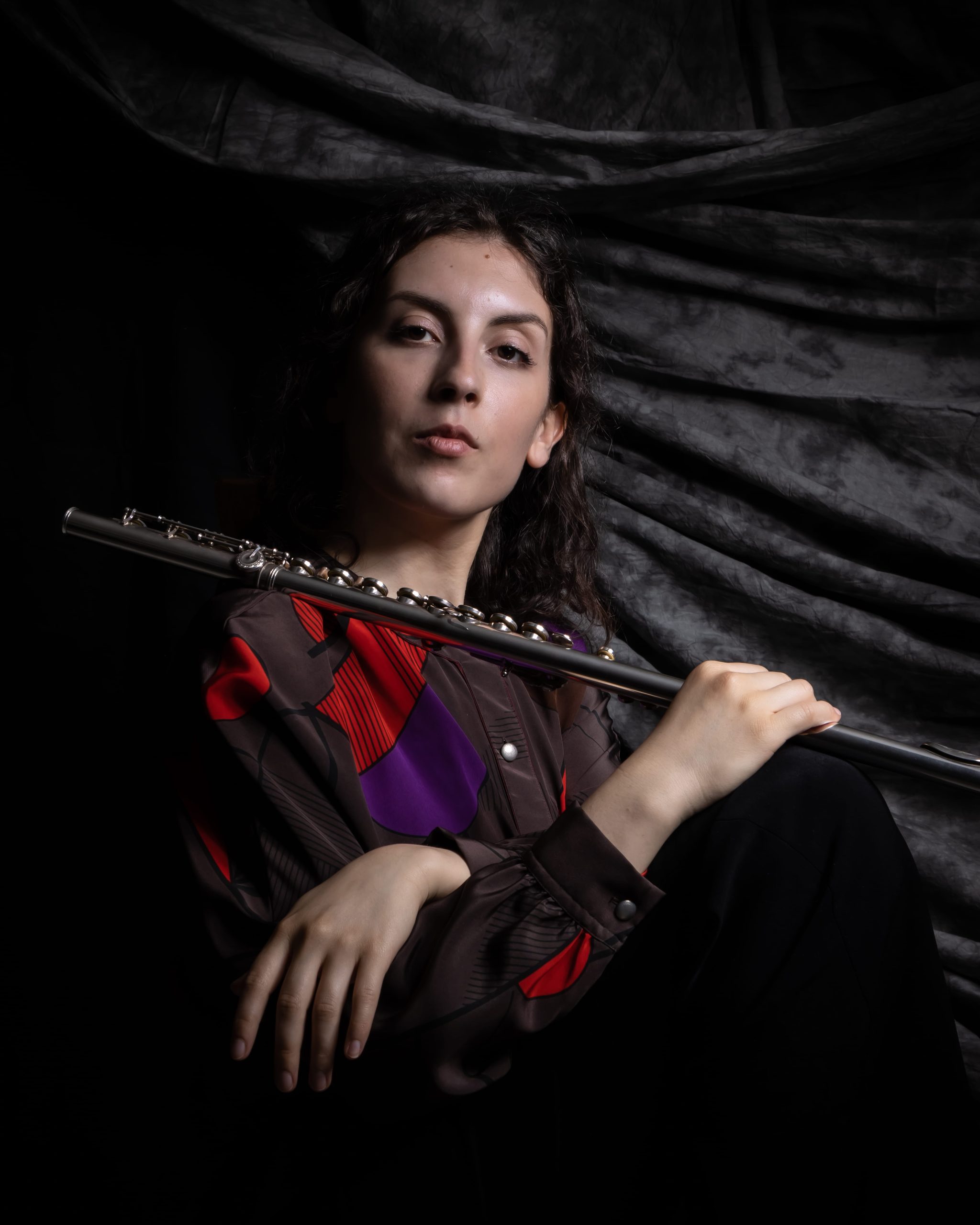
Alessia Scilipoti graduated in flute at the Conservatorio di Como and in chamber music at the Conservatorio di Milano, both with highest honours and distinction. In 2023 she won First Prize at the Premio Nazionale delle Arti. She plays principal flute and piccolo with orchestras including Teatro Bellini in Catania, Teatro Goldoni in Livorno and the Orchestra di Padova e del Veneto, and was selected for the Lucerne Festival Academy 2025.
Her ground is contemporary music: she works with mdi ensemble, Divertimento Ensemble and MLOrk. In 2025 she released FRAGILE, her first solo flute album, with music by Takemitsu, Saariaho, Romitelli and Barrett written for flute, breath and voice. In 2024 she appeared as musician-actor at the Piccolo Teatro in Milano.
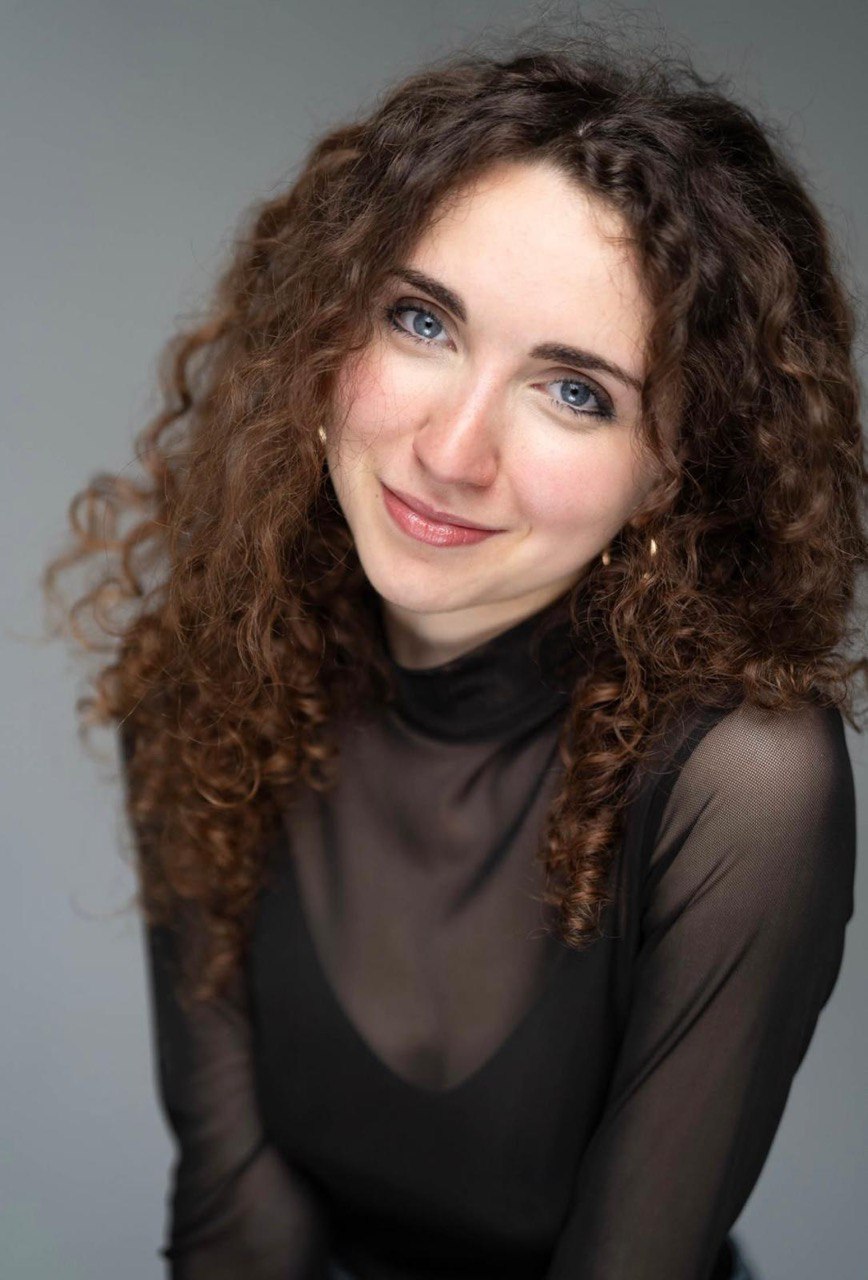
Agnese Sofia Bonato (2002) began studying cello at four and entered the Conservatorio di Vicenza at eight. For a decade she played in youth orchestras in Italy, Austria and the Czech Republic. In 2021 she won a place at the Piccolo Teatro’s Scuola di Teatro Luca Ronconi in Milano, studying with Antonio Latella, Mauro Avogadro and Francesca Della Monica among others, and graduated in 2024 with A Midsummer Night’s Dream directed by Carmelo Rifici.
She plays Clarice in the Piccolo’s Arlecchino servitore di due padroni, which has toured as far as Beijing. In 2025 she was speaking voice in Luciano Berio’s Laborintus II. Between instrument and word, her work treats the voice as sonic material before it is a vehicle for meaning.
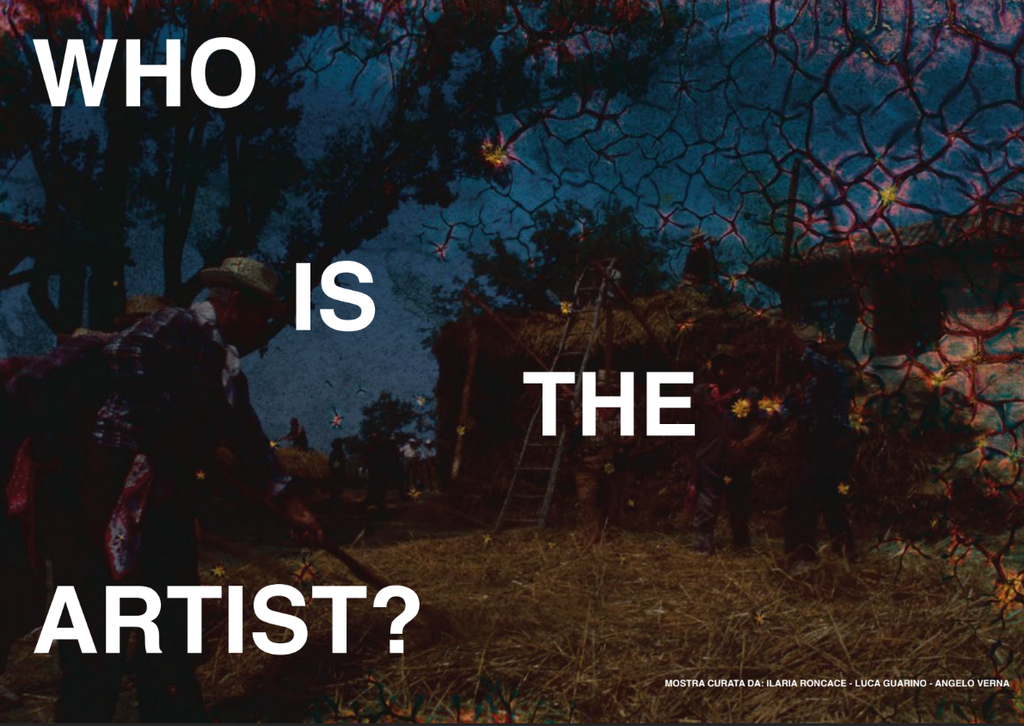
Ilaria Roncace, Luca Guarino, Angelo Verna
Who is the Artist?
with the patronage of ISIA Faenza
Video screening in collaboration with ISIA Faenza. The photographic installation connected to the project is on view in the garden, open throughout the festival.
During the clearing of the mud, after the flood, around a hundred slides were found: photographs from the last century, by an unknown hand. Damp and silt had altered the film, and out of that damage came colours and shapes nobody had photographed. The owner was sought through flyers and appeals on social media. No one answered.
A year later the slides were digitised, and they are now brought together into an exhibition. There is no single author in this project. The images are the product of layered gazes, time and transformation: the unknown photographer, the river Lamone that altered them, and the act of recovering and sharing them.
So this exhibition, with its material images — the fruit of an almost spiritual alchemy made of souls, water and mud, memories and tears — puts a fair question to the visitor: who is the artist?
An exhibition curated by Ilaria Roncacè, Luca Guarino and Angelo Verna, three young students at ISIA Faenza.
Ilaria took care to gather and preserve old slides, fragments of memory surfacing from the mud. From that documentary treasure came the idea of giving back images and immersive audiovisual installations whose principal authors are the water and the mud of the river Lamone.
The exhibition is a poetic gesture, meant to convey trust and a desire for renewal, helping us see nature as destructive and creative at the same time.
saturday, september 12th 2026
Riccardo La Foresta
Drummophone
The Drummophone began in 2015 with a simple question: what if a drum were a wind instrument?
A small folded cymbal, with a tube attached at its centre, rests on a drumhead. Air moving through the tube — blown by the player, or driven by electric blowers — sets the membrane vibrating. Out of it come drones, harmonics, beatings, melodies, even precisely tuned chords: gestures that have nothing left in common with drumming.
The name comes from drummer, not drum: it began as a solo project, and it remains a continuous negotiation between the musician and the object he built. Its tuning is sensitive to place. The best resonances are found live, and they differ in every room.
Riccardo La Foresta is a percussionist and sound artist whose recent output has taken in a wide range of practices connected to sound. He has been developing the Drummophone since 2015, while also creating site-specific performances, sound sculptures and installations, without confining his work to percussion.
He has performed experimental music and presented sound installations at festivals including Unsound, CTM (Berghain), Terraforma Simposio, Sonica, OSA, Skaņu Mežs, Sacrum Profanum, LisboaSoa, LOST, Robot, AngelicA, Tempo Reale, La Digestion and Romaeuropa. He founded the NODE festival in Modena, where he lives and runs a residency programme at La Torre. His records have appeared on labels including Subtext Recordings, OOH-sounds, Kohlhaas, Improved Sequence and Yerevan Tapes, and his music has been broadcast by BBC Radio, Radio France, East Village Radio, Radio 3 and NTS.
In 2021 he was a Shape Platform artist.
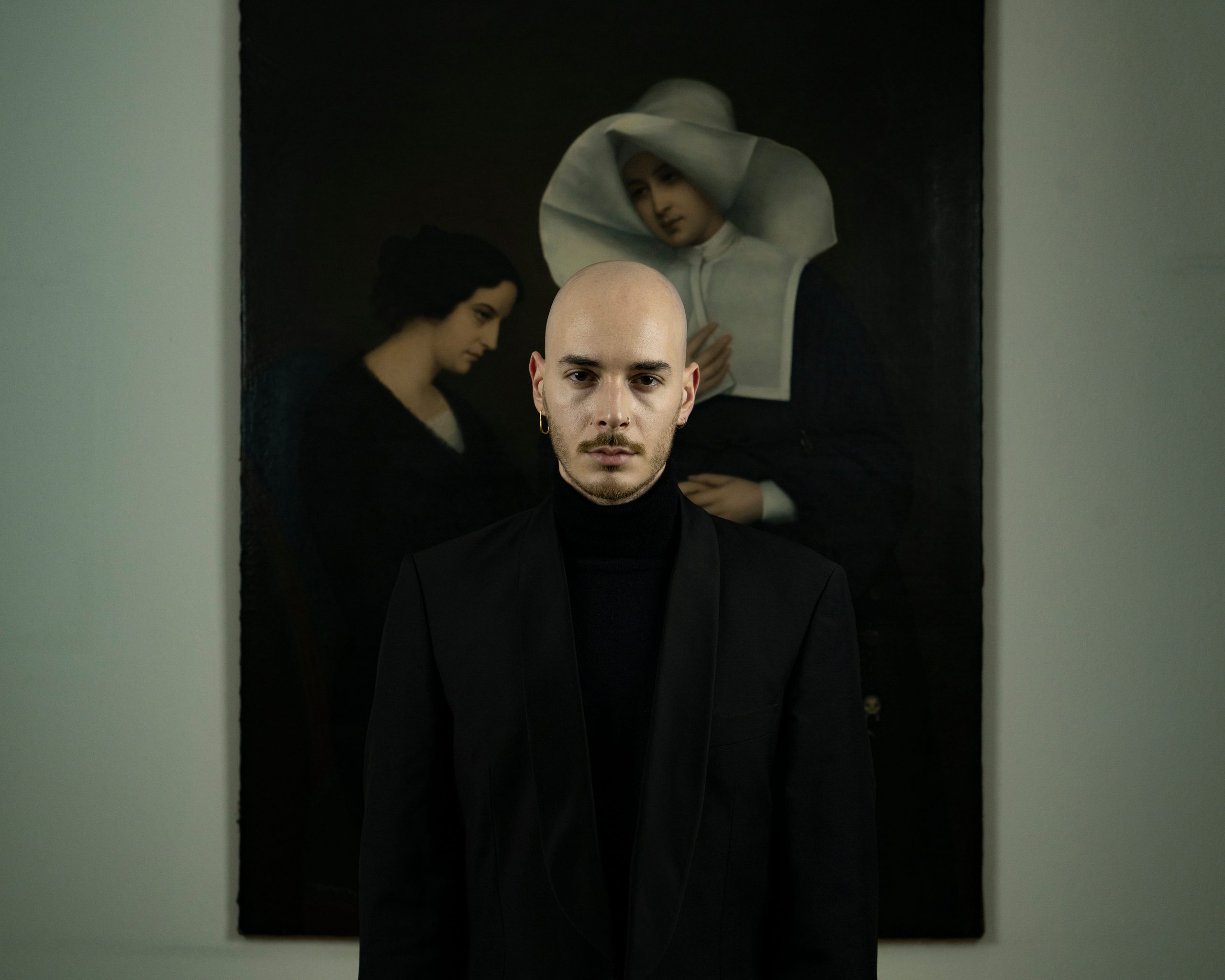
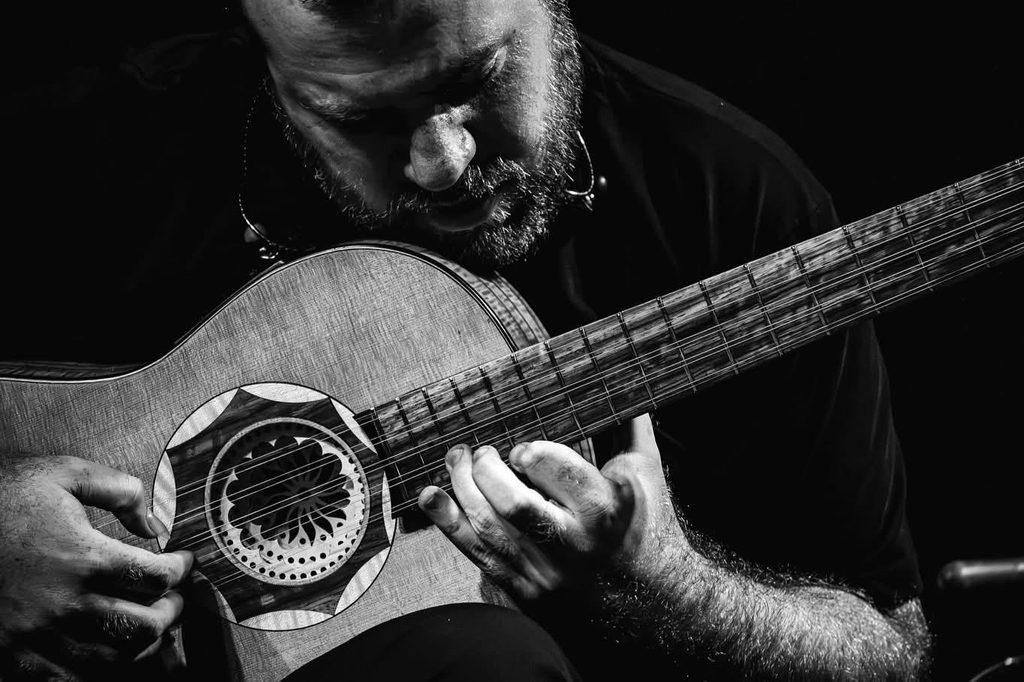
Alessandro Santacaterina
Chitarra battente, live electronics
The chitarra battente is one of Calabria’s most emblematic instruments — a strummed, metal-strung guitar from the south of Italy. Santacaterina is among its leading players today: he has developed a virtuosic solo technique and, on the electronic side, a sound moving between ambient and post-rock, using self-built objects alongside conventional means.
The concert tells of a contemporary Calabria, where a traditional instrument meets new languages, other cultures and digital technologies. Through sound synthesis and electroacoustic experimentation come work songs, songs of the linguistic minorities, dance tunes and vocal polyphony.
Alternating with these are popular dances of the seventeenth century, returning the chitarra battente to its baroque origins — and rendering Calabrian material in the idioms of the period.
Alessandro Santacaterina is a musician, composer and researcher, today among the leading virtuosi of the chitarra battente. He performs as a soloist and in ensembles across Italy and Europe, including the Auditorium Parco della Musica in Rome, Roccella Jazz, the Serbian National Theatre in Novi Sad and the Landestheater in Linz. In 2024 he released Santacaterina, his first solo album, on the Mr. Few label, with a foreword by Paolo Angeli; since that year he has played in the orchestra of Notte dei serpenti, directed by Enrico Melozzi.
His work holds together traditional Calabrian repertoire, contemporary composition and electronics, until the boundary between art music and popular music becomes porous. It is what the anthropologist Vito Teti calls restanza: not shutting yourself inside a place, but opening onto the world through it.
sunday, september 13th 2026
Agnese Banti & Andrea Troni
Δ
Sound architecture
A sound installation work growing out of the sonic and musical research around Speaking Cables, a choreographic device for voice, cables and loudspeakers — a way of thinking the voice graphically in space. Starting from an original form of musical architecture built on the principle of harmonic convergence (see Roberto Laneri’s Cristalli Armonici), the work is conceived specifically for the space of Arena Borghesi, for Ulysses Festival.
Agnese Banti — sound artist, musician and overtone singer, from Tuscany — and Andrea Trona — musician, sound engineer and music technologist, from Piedmont — both based in Bologna, have long been in artistic dialogue on installation, music and performance projects around the themes of sound, space and light. In recent years they have focused in particular on Speaking Cables, a choreographic device for voice, cables and loudspeakers, and on its spin-offs.